

Indonesia and the Global Spice Trade
Long before spices became everyday ingredients, the islands of eastern Indonesia were known to traders as the Spice Islands. Nutmeg and cloves from Maluku travelled across Asia, the Middle East, and Europe, shaping trade routes for centuries.
Today, Indonesia’s spice story continues in a modern form. Spices from Indonesian farms supply food manufacturers, seasoning producers, beverage brands, and ingredient companies around the world.
Indonesia’s tropical location, diverse climates, and many agricultural regions allow a wide range of spices to be grown across the archipelago. For international buyers, working with an experienced Indonesian spices supplier and sourcing partner helps turn this diversity into a reliable, well-specified supply. This guide gives an overview of spice sourcing in Indonesia for B2B buyers.
Why Source Spices from Indonesia?
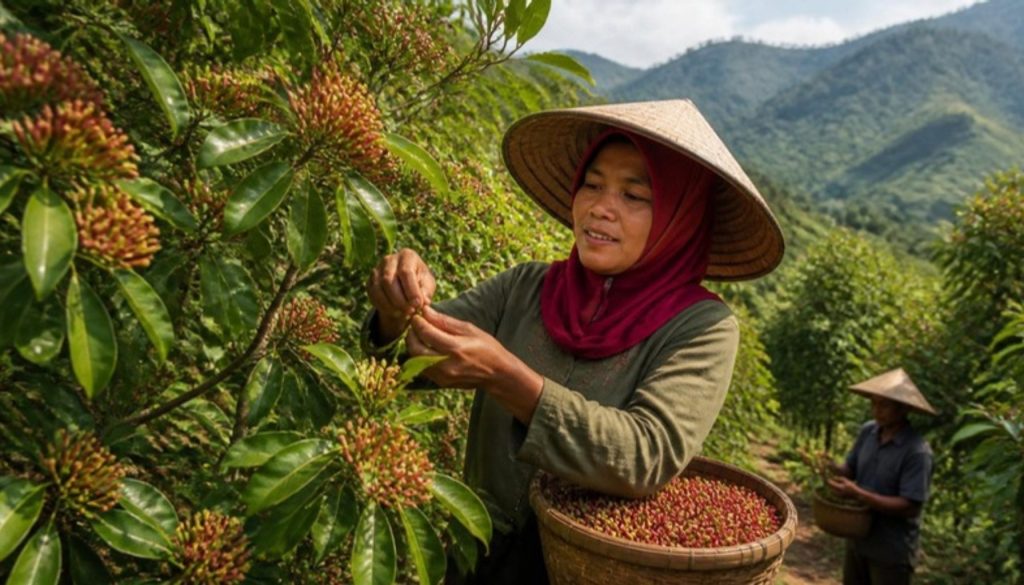
Indonesia’s diverse geography provides growing environments suitable for a wide range of spices with distinctive characteristics.
Tropical Climate
Warm temperatures and tropical rainfall support the growth of trees, vines, and rhizomes such as cinnamon, cloves, pepper, ginger, and turmeric.
Diverse Growing Regions
From the highlands of Sumatra to the islands of Maluku, different regions offer different soils, altitudes, and microclimates. This diversity gives buyers access to spices with varied profiles and origins.
Long Agricultural Tradition
Spice cultivation in Indonesia has been passed down through generations. Traditional knowledge of harvesting and drying remains an important part of how spices are produced today.
Wide Variety of Spices
Few origins can offer so many spices from a single country. Buyers can consolidate their sourcing of several spices through one origin and one sourcing partner.
Established Farming Communities
Much of Indonesia’s spice production comes from smallholder farmers and local collectors, supported by processors and traders who prepare products for commercial markets.
Availability for Food and Ingredient Industries
Indonesian spices are traded in whole, broken, dried, and ground forms, making them suitable for food processing, seasoning manufacturing, and ingredient applications.
Indonesian Spices We Can Source
Below are the main spices we can help source from Indonesia. Availability, grades, and forms depend on season, origin, and supplier capability.
Indonesian Cinnamon
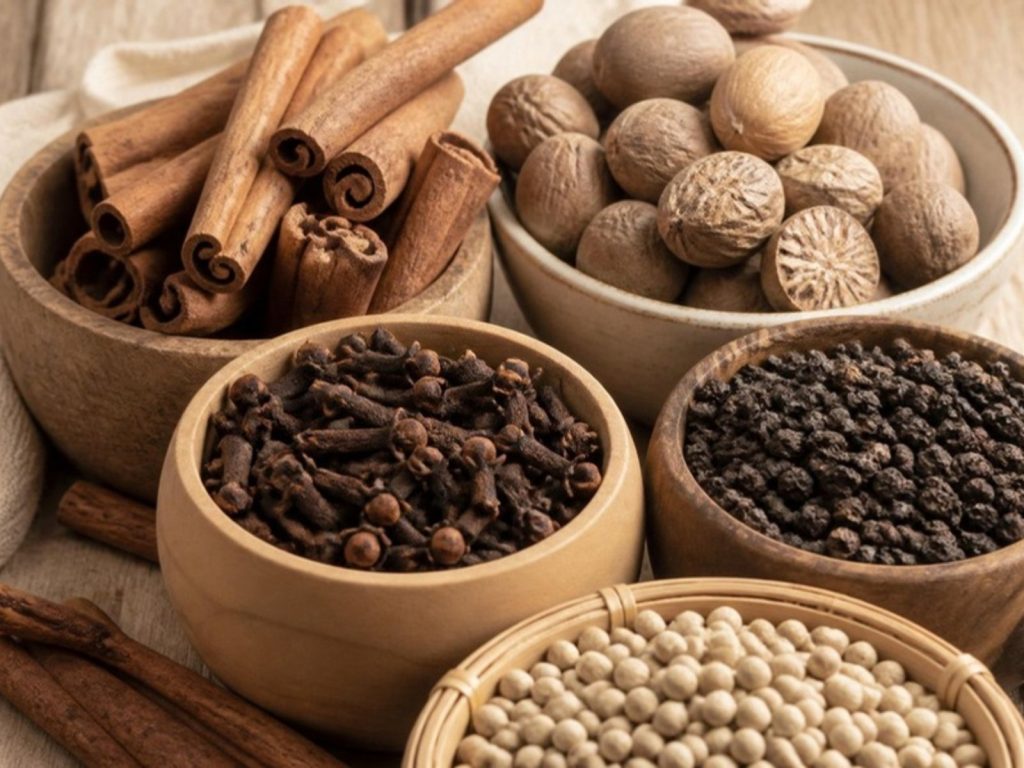
Indonesian cinnamon, commonly known in trade as cassia (Cinnamomum burmannii), is valued for its warm, sweet aroma and strong flavor. It is used in:
- Bakery
- Beverage
- Seasoning
- Food processing
- Extract manufacturing
Available forms include cinnamon sticks, cinnamon broken, and cinnamon powder. As a cinnamon supplier in Indonesia, we help buyers match the right form and grade to their application.
Indonesian Cloves
Cloves are the dried flower buds of the clove tree, native to Maluku. They have a strong, warm, and aromatic character, and are a key product for any clove exporter in Indonesia. Typical uses include:
- Food seasoning
- Beverage
- Herbal products
- Flavor industry
- Industrial ingredient applications
Available forms include whole cloves and ground cloves.
Indonesian Nutmeg
Nutmeg is one of Indonesia’s most historic spices, originally from the Banda Islands. Mace is the red aril surrounding the nutmeg seed and is traded as a separate spice. Available forms include:
- Whole nutmeg
- Broken nutmeg
- Nutmeg powder
- Mace, where available
Applications include bakery, beverage, seasoning, and food manufacturing. Buyers looking for a nutmeg supplier in Indonesia can discuss grade and form based on intended use.
Indonesian Black Pepper
Indonesian black pepper is made from dried peppercorns with the outer skin intact, giving a bold and pungent flavor. Lampung in Sumatra is one of the well-known black pepper origins. Available forms:
- Whole black pepper
- Ground black pepper
Applications include seasoning, processed food, food service, and ingredient manufacturing.
Indonesian White Pepper
White pepper is produced by removing the outer skin of ripe peppercorns before drying, resulting in a cleaner appearance and distinct pungency. The Bangka Belitung region is widely associated with Indonesian white pepper. It is used in:
- Sauces
- Soups
- Processed food
- Seasoning blends
- Food manufacturing
Ginger
Ginger is a versatile rhizome used across food, beverage, and seasoning applications. Available forms:
- Fresh ginger
- Dried ginger
- Ginger slices
- Ginger powder
Turmeric
Turmeric is known for its bright yellow-orange color and earthy flavor. Available forms:
- Dried turmeric
- Turmeric slices
- Turmeric powder
Turmeric is used in food, beverage, seasoning, and herbal ingredient applications.
Product Overview
| Spice | Available Form | Typical Application |
|---|---|---|
| Cinnamon | Stick, broken, powder | Bakery, beverage, seasoning |
| Cloves | Whole, ground | Food, flavor, herbal |
| Nutmeg | Whole, broken, powder | Bakery, beverage, seasoning |
| Black Pepper | Whole, ground | Food, seasoning |
| White Pepper | Whole, ground | Sauce, soup, processed food |
| Ginger | Fresh, dried, powder | Food, beverage |
| Turmeric | Dried, sliced, powder | Food, beverage, ingredients |
From Indonesian Farms to Global Buyers
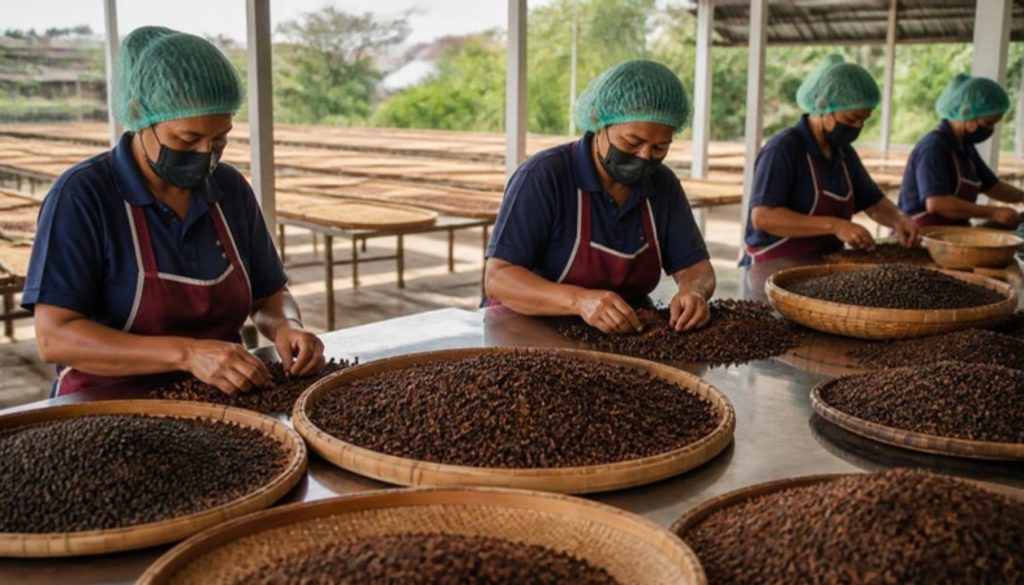
Every spice shipment is the result of many careful steps. While practices vary by commodity and supplier, the general journey looks like this:
Farm → Harvest → Drying → Sorting → Processing → Quality Check → Packaging → Export
- Farm — spices are cultivated by farmers across different Indonesian regions.
- Harvest — bark, buds, seeds, berries, or rhizomes are harvested at the appropriate stage of maturity.
- Drying — most spices are dried to reduce moisture and support storage and transport.
- Sorting — products are sorted to remove foreign matter and separate grades or sizes.
- Processing — depending on the order, spices may be cut, cleaned, broken, or ground.
- Quality Check — products are reviewed against the agreed specification before packing.
- Packaging — spices are packed according to the product form and buyer requirements.
- Export — shipments are prepared with the required documentation and logistics coordination.
Learn more about our agricultural sourcing process in Indonesia.
Quality Specifications
Spice buyers usually work with clear specifications based on their application and destination market. Parameters that can be discussed include:
- Moisture
- Size
- Grade
- Color
- Aroma
- Foreign matter
- Whole or ground form
- Packaging
- Microbiological requirements
- Certification requirements
Exact specifications depend on the commodity, supplier, origin, processing method, and buyer requirements.
Certification may be available depending on the supplier, production facility, product, and buyer requirements. We recommend sharing certification needs early in the inquiry process.
Packaging Options
Bulk spices from Indonesia can be packed in several ways depending on the product and destination. Options include:
- Food-grade inner liner
- Kraft bag
- PP woven bag
- Carton
- Vacuum packaging, where applicable
- Customized bulk packaging
Final packaging should be agreed between buyer and supplier before commercial shipment.

Applications of Indonesian Spices
Food Manufacturing
Spices are essential ingredients in processed foods, ready meals, sauces, snacks, and canned products, where consistency of flavor and specification is important.
Beverage Industry
Cinnamon, ginger, cloves, and turmeric are used in teas, spiced beverages, coffee blends, and powder drink formulations.
Seasoning Industry
Pepper, nutmeg, and other spices form the base of seasoning blends, marinades, and spice mixes for industrial and retail markets.
Bakery and Confectionery
Cinnamon, nutmeg, cloves, and ginger are classic bakery spices used in cakes, cookies, pastries, and confectionery products.
Herbal Products
Spices such as ginger, turmeric, and cloves are used as ingredients in herbal products, depending on the manufacturer’s formulation and local regulations.
Food Service
Restaurants, catering companies, and hospitality businesses use whole and ground spices in bulk for daily kitchen operations.
Private Label
Brands developing their own spice ranges can source Indonesian spices in bulk for repacking under their private label.
Why Work With Us?
Our role is to make sourcing Indonesian spices simpler and more transparent for international buyers.
Indonesian Sourcing Network
Access to farmers, collectors, processors, and spice suppliers across Indonesia.
Product Matching
Helping identify spices, forms, and grades that match your specifications.
Supplier Coordination
Coordinating with suppliers on availability, samples, and production timelines.
Quality Communication
Communicating your quality requirements clearly between you and the supplier.
Export Preparation
Supporting packaging, documentation, logistics, and shipment preparation.
Long-Term Partnership
Building reliable supply relationships for repeat and ongoing orders.
Beyond spices, we also help buyers source other Indonesian agricultural products such as Indonesian coconut sugar and Indonesian Moringa. Learn more about KlikFarm.
What Buyers Should Provide
Clear information helps us identify suitable supply options faster and provide a more accurate quotation. When sending an inquiry, please include:
- Spice required
- Whole / ground / dried form
- Grade
- Required quantity
- Product specification
- Packaging
- Destination country
- Destination port
- Certification requirements
- Estimated order frequency
Frequently Asked Questions
Which spices can an Indonesian spices supplier provide?
Commonly sourced spices include cinnamon, cloves, nutmeg and mace, black pepper, white pepper, ginger, and turmeric. Availability depends on season, region, and supplier capability, so we confirm options for each inquiry.
Can I source several spices in one shipment?
In many cases, yes. Consolidating several spices can simplify logistics for importers and distributors. Feasibility depends on quantities, packaging, supplier locations, and destination requirements.
Do you work as an Indonesian spices exporter or as a sourcing partner?
We act as a sourcing partner and export coordinator. We work with Indonesian producers and processors to match your requirements, coordinate samples and specifications, and support export preparation.
Are samples available before ordering?
Samples can be arranged where available, subject to the spice, form, and supplier. Samples help confirm aroma, color, size, and grade before a commercial order.
What about certified spices?
Certification may be available depending on the supplier, production facility, product, and buyer requirements. Please share your certification needs and destination market so we can check suitable options.
Which pepper origins are available?
As an Indonesian pepper supplier partner, we can discuss black pepper and white pepper from different Indonesian producing regions, depending on current availability and your specification.
Looking for Indonesian Spices?
Tell us the spices, specifications, quantity, packaging, and destination you require. Our team will help explore suitable sourcing options from Indonesia.
Indonesia’s Spices, Connected to Global Markets.
Your Trusted Gate to Indonesian Organic