
Food and beverage companies around the world are rethinking how they sweeten their products. Buyers increasingly look for natural, minimally processed sweeteners with a clear origin story, whether for bakery lines, beverage formulations, or retail and private label ranges.
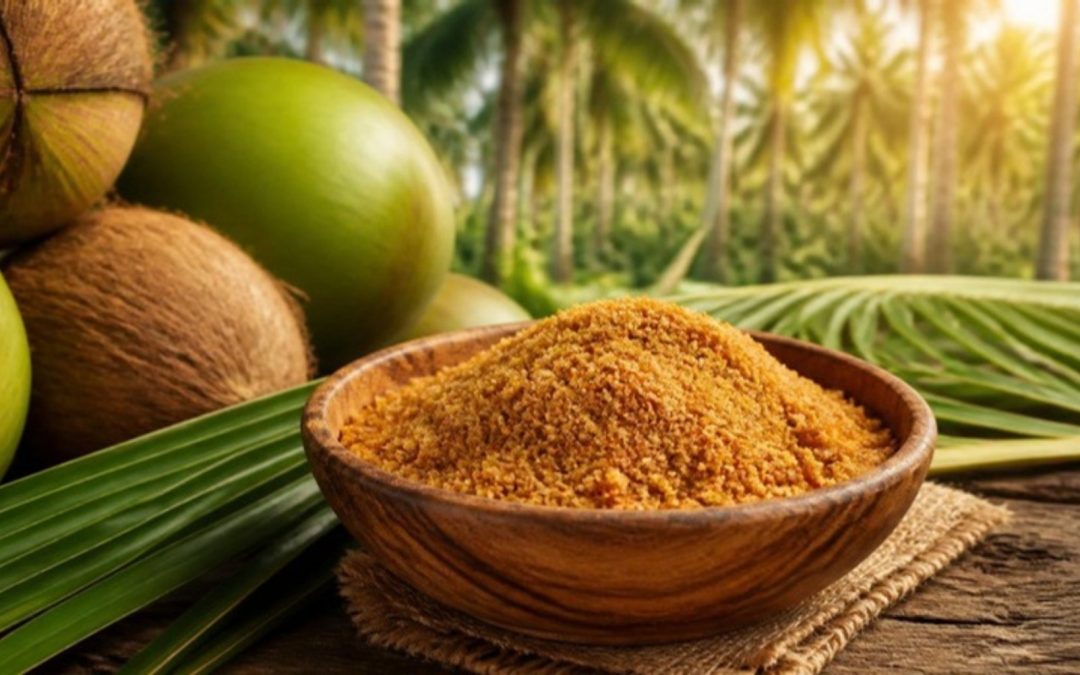
Coconut sugar has become one of the ingredients meeting this demand. It is made from the nectar, or sap, collected from the flower blossoms of the coconut palm, which is then gently heated and processed into a natural sweetener with a warm, caramel-like character.
Indonesia, a tropical country with extensive coconut plantations and a long tradition of making gula kelapa, is a natural origin for this product. For importers and manufacturers, working with an experienced Indonesian coconut sugar supplier and sourcing partner can make the difference between an occasional purchase and a dependable supply program.
What Is Coconut Sugar?
Coconut sugar is a natural sweetener made from the sap collected from coconut palm flower blossoms. It should not be confused with sugar made from the coconut fruit or coconut water. The raw material is the sweet sap that flows from the palm’s flower stalk.
The general production process follows a simple path:
Coconut Sap → Collection → Filtration → Heating → Concentration → Crystallization → Coconut Sugar
Depending on how the concentrated sap is finished, the process can produce several formats:
- Granulated coconut sugar
- Coconut sugar powder
- Coconut sugar blocks
- Coconut syrup (coconut nectar)
For international B2B buyers, the most commonly traded formats are granulated coconut sugar and coconut sugar powder, as they are easy to store, measure, blend, and use in industrial production.
Why Source Coconut Sugar from Indonesia?
Indonesia is an archipelago stretching along the equator, and coconut palms are part of the landscape in many of its regions. Coconut sugar has been produced in Indonesian villages for generations, long before it became an international ingredient.
Indonesia’s tropical environment and long tradition of coconut cultivation have created strong agricultural communities experienced in producing coconut-based products.
Tropical Climate
Warm temperatures and tropical conditions support coconut palms throughout the year, allowing sap to be tapped on a regular basis rather than in a single short season.
Extensive Coconut-Growing Regions
Coconut palms are cultivated across many Indonesian islands. This geographic spread gives buyers access to multiple producing areas and supplier options.
Traditional Production Knowledge
Tapping coconut blossoms and cooking sap into sugar is a skill passed down through families. This know-how forms the foundation of today’s commercial coconut sugar production.
Agricultural Communities
Much of the sap is collected by smallholder farmers and processed by local producer groups and processors, connecting each shipment to real farming communities.
Availability of Coconut-Based Products
Alongside coconut sugar, Indonesia produces a wide range of coconut-based products. This broader industry supports local expertise in handling, processing, and packing coconut-derived ingredients.
Potential for Commercial and Export Supply
With established producers and processors in several regions, Indonesia offers potential for commercial and export-oriented supply, developed according to buyer volumes and specifications.
From Coconut Sap to Natural Sugar
Every batch of coconut sugar begins high in the coconut palm. While methods vary between producers, the general process follows these steps.

Step 1 — Coconut Sap Collection
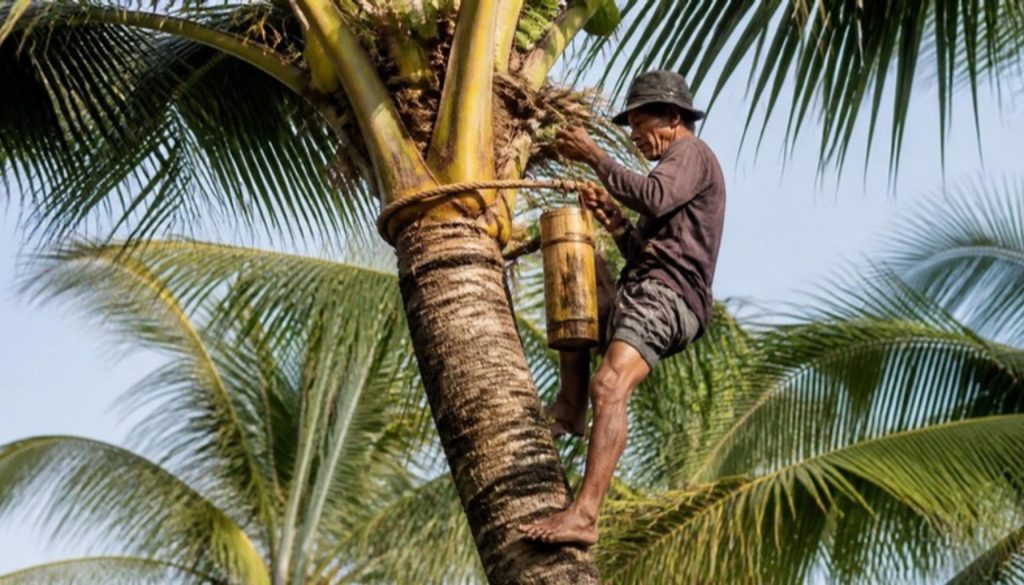
Farmers climb the coconut palms and carefully cut the flower blossom. The sap that flows from the blossom is collected in containers, usually once or twice a day.
Step 2 — Filtering
The collected sap is typically filtered to help remove foreign material such as insects, leaves, or other debris before processing.
Step 3 — Heating
The filtered sap is heated in large pans to gradually reduce its water content.
Step 4 — Concentration
As heating continues, the sap turns into an increasingly thick, concentrated syrup. At this stage it can be finished as coconut nectar or processed further into sugar.
Step 5 — Crystallization
The concentrated syrup is stirred and cooled until it forms sugar crystals, or is poured into molds to form blocks.
Step 6 — Drying and Sieving
Granules are dried and sieved to achieve the required particle size, from coarser granules to fine powder.
Step 7 — Packaging
The finished product is packed according to the buyer’s commercial and packaging requirements.
Palm Tree → Coconut Sap → Cooking → Crystallization → Drying → Packaging → Export
Coconut Sugar Products We Can Source
Different industries need different coconut sugar formats. Below are the main product forms we can help source from Indonesia.

Granulated Coconut Sugar
Granulated coconut sugar is one of the most widely used formats for food, beverage, bakery, retail, and natural sweetener applications. Potential applications include:
- Food manufacturing
- Bakery
- Beverage formulations
- Retail packaging
- Natural sweetener products
Coconut Sugar Powder
Finely processed coconut sugar suitable for applications requiring smaller particle size and easier blending. For companies looking for a coconut sugar powder supplier, typical applications include:
- Powder beverages
- Food premixes
- Baking
- Seasoning blends
- Private label products
Coconut Sugar Block
Traditional solid coconut sugar typically formed into blocks or molds and widely used in food preparation. Applications include:
- Traditional food
- Culinary products
- Food processing
Coconut Nectar / Syrup
Liquid coconut nectar derived from concentrated coconut sap. Applications include:
- Beverage
- Sauce
- Food formulation
- Natural sweetener products
Product Overview
| Product | Form | Typical Application |
|---|---|---|
| Granulated Coconut Sugar | Granules | Food, beverage, bakery |
| Coconut Sugar Powder | Fine powder | Premix, beverage, bakery |
| Coconut Sugar Block | Solid block | Culinary, food processing |
| Coconut Nectar | Liquid syrup | Beverage, sauce, sweetener |
Natural Characteristics of Coconut Sugar
Coconut sugar is valued by product developers for its distinctive sensory profile. General characteristics include:
- Appearance — golden brown to dark brown
- Flavor — caramel-like, with a warm and rounded sweetness
- Origin — made from natural coconut sap
- Aroma — distinctive, often described as toasty or caramel-like
- Versatility — suitable for many food and beverage formulations
Color, aroma, sweetness profile, and particle size may vary depending on raw material, processing method, region, and supplier specification.
Applications of Coconut Sugar
Coconut sugar for the food industry and coconut sugar for the beverage industry are among the most common inquiries we receive. Typical application areas include:
Food Manufacturing
- Confectionery
- Snacks
- Sauces
- Ready-to-eat products
- Natural food products
Bakery
- Bread
- Cookies
- Cakes
- Granola
- Pastry products
Beverage Industry
- Coffee
- Tea
- Powder drinks
- Plant-based beverages
- Functional beverages
Retail Products
- Organic food stores
- Natural product retailers
- Private label packaging
Food Service
- Cafés
- Restaurants
- Hospitality
- Catering
Coconut Sugar Specifications
There is no single specification for coconut sugar. Each supplier has its own production capability, and each buyer has requirements based on application, market, and regulations.
Parameters that are commonly discussed include:
- Moisture
- Particle size
- Color
- Taste
- Aroma
- Solubility
- Packaging
- Shelf life
- Microbiological parameters
- Certification requirements
Example Specification Only
| Parameter | Example Requirement |
|---|---|
| Product | Coconut Sugar |
| Form | Granulated / Powder |
| Color | Golden brown to dark brown |
| Packaging | Based on buyer requirement |
| Origin | Indonesia |
| Certification | Subject to supplier availability |
Example specification only. Final product specifications should always be confirmed through an approved specification sheet and product sample before commercial orders.
Buyers looking for organic coconut sugar from Indonesia should share their certification requirements at the start of the discussion. Certification may be available depending on the supplier, production facility, and product specification.
Quality Based on Buyer Requirements
International buyers usually work with their own quality standards, documentation needs, and market regulations. A bakery manufacturer in Europe and a beverage brand in Asia may require very different product profiles.
Our role is to help connect buyer requirements with suitable Indonesian producers and processors. We help coordinate:
- Product specification
- Supplier selection
- Sample arrangement
- Packaging
- Documentation
- Certification requirements
- Commercial quantity
- Destination
- Export preparation
Bulk Packaging Options
Bulk coconut sugar can be packed in different ways depending on the product format and destination. Examples of bulk packaging include:
- Food-grade inner bag
- PE liner
- Kraft bag
- Carton
- Export sack
- Customized commercial packaging
Packaging options depend on product format, quantity, supplier capability, and buyer requirements.
From Indonesian Coconut Farmers to Global Markets
Farm → Sap Collection → Processing → Quality Control → Packing → Logistics → Global Buyer
Coconut sugar passes through many hands before it reaches a factory or a store shelf. Farmers tap the palms and collect the sap. Processors cook, crystallize, dry, and sieve it into finished sugar.
Suppliers and traders consolidate volumes and prepare products to specification. Exporters manage documentation and logistics, and global buyers turn the ingredient into finished products for their markets.
Behind every shipment is a supply chain involving farmers, processors, quality teams, logistics partners, and buyers. Our goal is to help make this chain more transparent, organized, and reliable.
Your Coconut Sugar Sourcing Partner in Indonesia
As an Indonesian agricultural exporter and sourcing partner, KlikFarm supports buyers who need coconut sugar wholesale and bulk supply from Indonesia.
Local Sourcing Network
Access to Indonesian producers, processors, and agricultural suppliers.
Buyer Requirement Matching
Helping identify suitable products based on your specifications.
Sample Coordination
Product samples can be arranged where available.
Quality Communication
Helping communicate buyer requirements clearly with suppliers.
Export Coordination
Supporting packaging, documentation, logistics, and shipment preparation.
Long-Term Partnership
Building sustainable commercial relationships between Indonesian suppliers and international buyers.
What Information Should Buyers Provide?
The more we know about your needs, the faster and more accurately we can identify suitable supply options. When sending an inquiry, please include:
- Product required
- Format: granulated / powder / block / syrup
- Required quantity
- Target price
- Packaging requirement
- Destination country
- Destination port
- Product specification
- Certification requirement
- Estimated order frequency
Clear information helps us match your request with the right coconut sugar supplier in Indonesia, prepare relevant samples, and provide a more accurate quotation.

Looking for Coconut Sugar from Indonesia?
Looking for reliable coconut sugar sourcing from Indonesia?
Whether you are an importer, food manufacturer, distributor, wholesaler, or private label company, tell us your requirements and we will help explore suitable sourcing options.
Please provide:
- Product type
- Quantity
- Specification
- Packaging
- Destination country
- Destination port
Indonesia’s Natural Goodness, Delivered to the World.
Your Trusted Gate to Indonesian Organic